Concrete Flatwork in Constantine, MI
Barn floors, equipment pads, and ag driveways, bundle it with your build. Built for St. Joseph County by proven Amish and local crews, get a straight quote with no obligation.
- Proven Amish & local crews
- Free, no-obligation quotes
- Northern Indiana & SW Michigan
- Honest ranges, no bait pricing
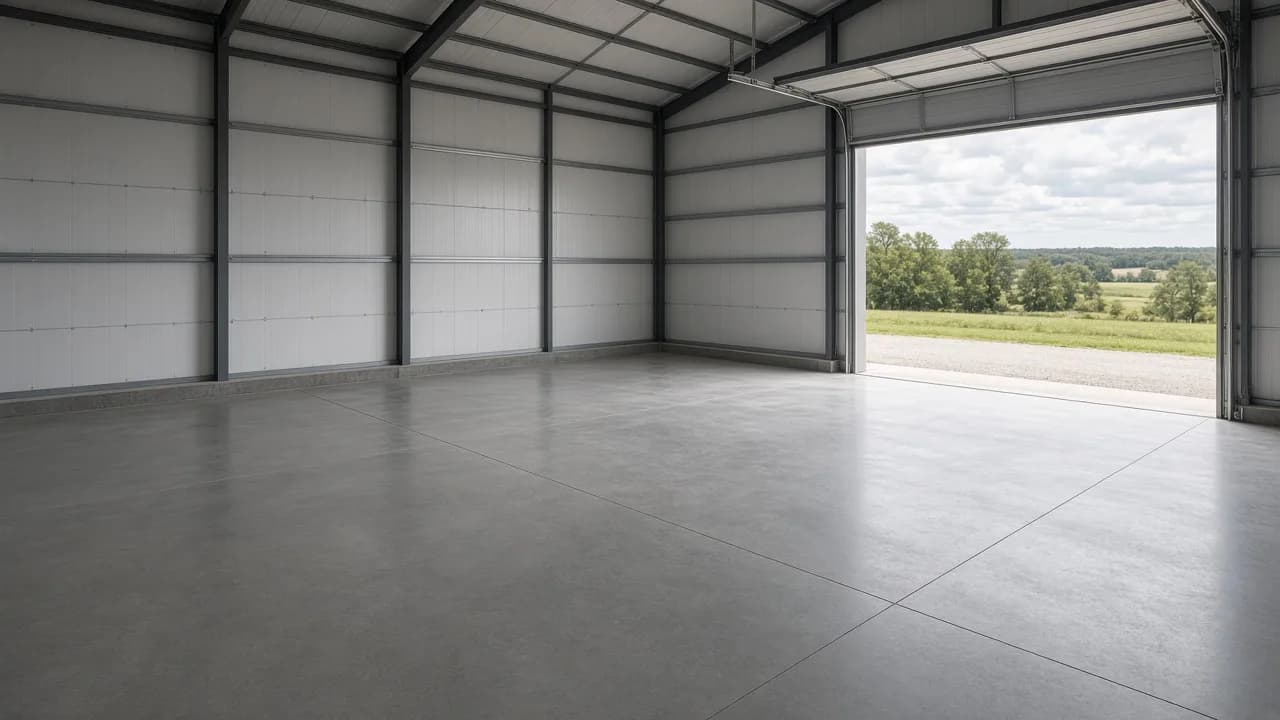
Free Constantine quote
Tell us about your project and where it's going. A crew follows up fast.
Concrete Flatwork in Constantine, Michigan
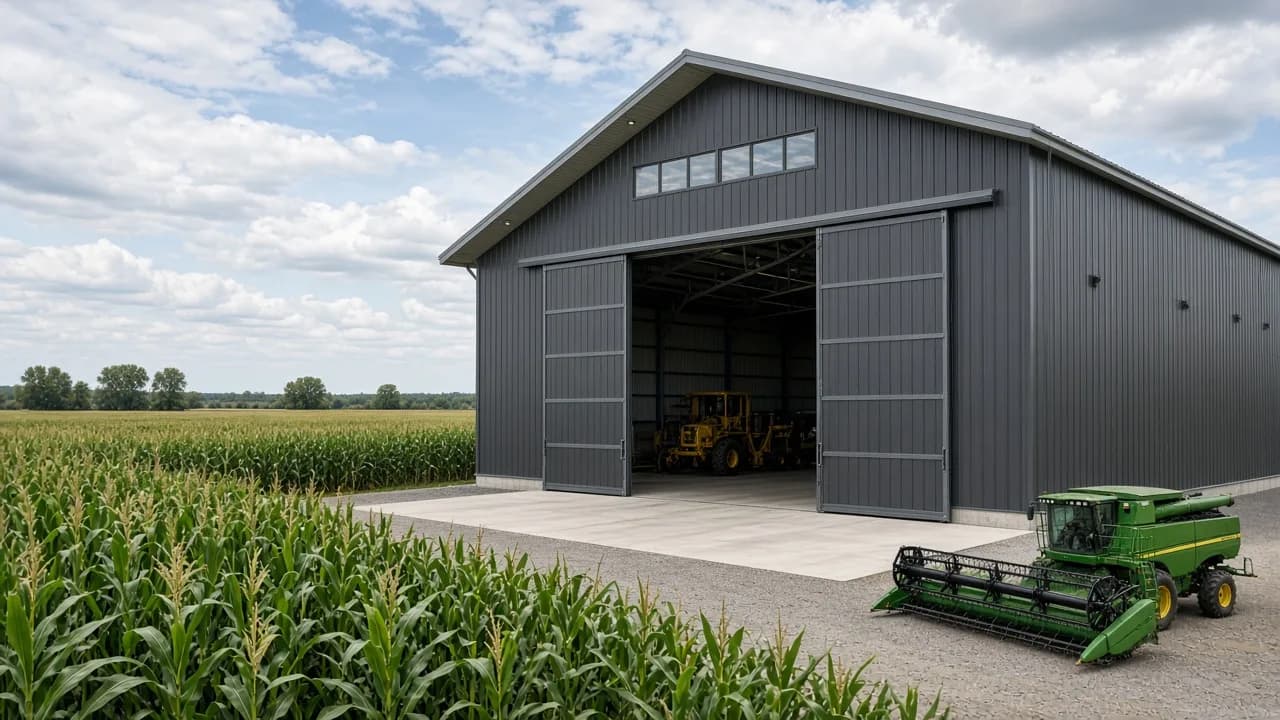
In Constantine, the Seed Corn Capital along the St. Joseph River, row-crop farms need pads and floors that hold up. Crews cross the line from the Shipshewana area to pour bin and equipment pads, barn floors, and driveways, with the grade, drainage, and joints set right for freeze-thaw.
Serving Constantine and St. Joseph County
Constantine calls itself the Seed Corn Capital of the World, and the title isn't idle, this St. Joseph County town on the river and US-131 sits in some of the most serious seed-corn and row-crop ground in the region. That agricultural character defines the building demand: equipment and machinery storage, grain and seed handling buildings, shops, and the large, functional structures a working seed and grain operation runs on. It's a farm-first market, and post-frame is the natural fit for the spans and heights that kind of ag work requires.
This is heavy ag country, and buildings often serve genuine farm operations, which affects both the scale, bigger spans and clear heights, and the permit path. Michigan uses a statewide code with a 42-inch footing frost depth, deeper than Indiana's. St. Joseph County has no countywide building department, so permits run through the Village of Constantine or the township building official, with trade permits through the State of Michigan; the crew confirms it and factors in any ag-use considerations. Plans are engineered for Michigan snow load.
What's included
- Look at the site, grade, drainage, access for the truck
- Grade and compact a proper stone base
- Form and set the pour to the right height and slope
- Reinforce with wire or rebar as the load calls for
- Place, finish, and control-joint the concrete
- Options: thickened edges, apron, in-floor heat tubing rough-in
What it costs
Concrete flatwork is priced by the square foot and the thickness, so cost follows area and how heavy the loads will be. Most barn and farm pours in this area run $5,000 to $20,000. A standard barn or garage floor sits in the middle; a thicker pad rated for equipment or a large ag driveway runs higher. Site prep, grading, stone base, and drainage, is part of the number. Poured with your building or on its own, the quote follows a look at the site.
$5,000–$20,000
A firm number comes after a crew sees your site and spec, never before. No obligation.
The difference
Why proven Amish & local crews
Flatwork that lasts is mostly what happens before the pour, the base, the grade, the drainage. The crews we work with prep the ground properly and control-joint the slab so it cracks where it's supposed to and not across the middle, which is what separates a floor that lasts from one that fails in a few winters.
We connect you with established crews across the region, no subcontractor roulette, no national franchise markup. Straight positioning: the crews are real and the quotes are honest.
Concrete Flatwork: common questions
- How thick should a pole barn floor be?
- A typical barn or garage floor is four inches over a compacted stone base, which handles vehicles and general use. If you'll park heavy equipment, run a lift, or drive loaded trucks in, a thicker slab, five or six inches, sometimes with rebar, is worth it. The crew rates the slab to the heaviest thing that'll sit on it.
- Can you pour a floor in a barn that's already built?
- Yes, as long as the truck or pump can reach and there's room to grade and form inside the building. Many owners build the shell first and pour later once budget allows. The crew checks access and the interior grade and pours to the finished height you want.
- How do you keep the concrete from cracking?
- You can't stop concrete from moving, but you control where it cracks. That means a compacted base, proper thickness and reinforcement, and control joints cut at the right spacing so shrinkage cracks follow the joints instead of wandering across the floor. Good site prep and jointing are most of the battle in freeze-thaw country.
Constantine questions
- Do you build large ag and equipment buildings for farms around Constantine?
- Yes, Constantine's seed-corn and row-crop operations need real ag buildings: wide-span equipment and machinery storage, grain and seed handling structures, and big shops. Post-frame handles those spans and heights well, and crews build to the scale a working farm here actually needs.
- What size buildings can you put up for a working farm?
- Post-frame scales well, clear spans of 60 feet and more and tall sidewalls for equipment and grain handling are all standard. The right size comes out of how the building will be used; tell the crew the equipment and workflow and they'll engineer the spans and heights around it, to Michigan code and its 42-inch footing depth.
Other projects in Constantine
Get your free Constantine quote
Call now or request a free quote, proven Amish and local crews across Michiana.