Concrete Flatwork in LaGrange, IN
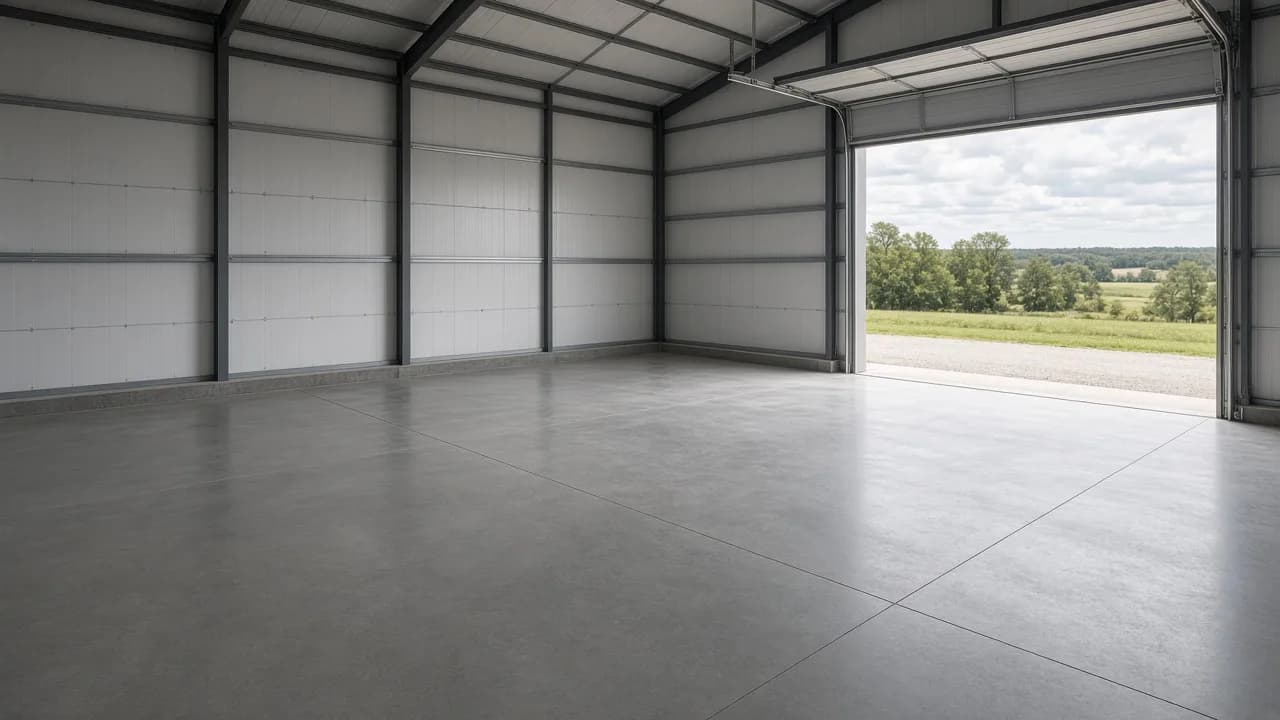
Barn floors, equipment pads, and ag driveways, bundle it with your build. Built for LaGrange County by proven Amish and local crews, get a straight quote with no obligation.
- Proven Amish & local crews
- Free, no-obligation quotes
- Northern Indiana & SW Michigan
- Honest ranges, no bait pricing
Free LaGrange quote
Tell us about your project and where it's going. A crew follows up fast.
Concrete Flatwork in LaGrange, Indiana
In LaGrange's horse country, out toward Topeka and the Pigeon River, a solid pad is the difference between a barn that lasts and one that heaves. Just ten miles from our Shipshewana base, local crews pour barn floors, driveways, and equipment pads jointed and graded for freeze-thaw.
Serving LaGrange and LaGrange County
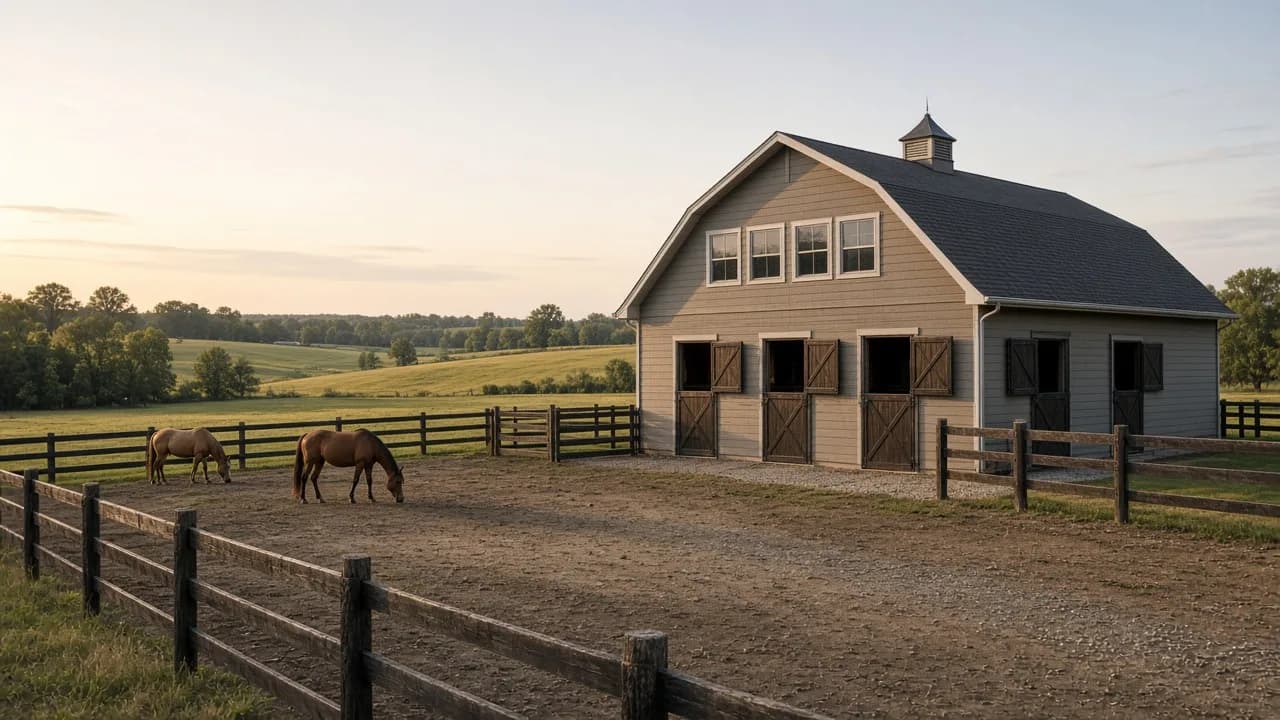
LaGrange is the county seat and, with Topeka just to the southwest, the center of gravity for Michiana horse country. This is the heart of the LaGrange-Elkhart Amish settlement, where horses aren't a hobby but a working part of daily life, and the demand for horse barns, stables, and run-in shelters is unlike anywhere else in the area. Beyond the horse buildings, the land along US-20 and SR-9 toward the Pigeon River country is productive farm ground running to livestock, hay, and equipment storage on plain-community farms.
Horse country shapes the building demand: barns designed around stalls, aisles, hay, and ventilation rather than generic storage. On unincorporated farm parcels, permits run through the LaGrange County Building Department in LaGrange, (260) 499-6300, which requires the building contractor to register with the county before a permit issues, so allow a few business days. Much of the surrounding farmland may qualify for ag-use treatment; rural home parcels follow county zoning. The crew sorts which path applies, sets footings below the local frost line, and sizes the building for LaGrange County snow load.
What's included
- Look at the site, grade, drainage, access for the truck
- Grade and compact a proper stone base
- Form and set the pour to the right height and slope
- Reinforce with wire or rebar as the load calls for
- Place, finish, and control-joint the concrete
- Options: thickened edges, apron, in-floor heat tubing rough-in
What it costs
Concrete flatwork is priced by the square foot and the thickness, so cost follows area and how heavy the loads will be. Most barn and farm pours in this area run $5,000 to $20,000. A standard barn or garage floor sits in the middle; a thicker pad rated for equipment or a large ag driveway runs higher. Site prep, grading, stone base, and drainage, is part of the number. Poured with your building or on its own, the quote follows a look at the site.
$5,000–$20,000
A firm number comes after a crew sees your site and spec, never before. No obligation.
The difference
Why proven Amish & local crews
Flatwork that lasts is mostly what happens before the pour, the base, the grade, the drainage. The crews we work with prep the ground properly and control-joint the slab so it cracks where it's supposed to and not across the middle, which is what separates a floor that lasts from one that fails in a few winters.
We connect you with established crews across the region, no subcontractor roulette, no national franchise markup. Straight positioning: the crews are real and the quotes are honest.
Concrete Flatwork: common questions
- How thick should a pole barn floor be?
- A typical barn or garage floor is four inches over a compacted stone base, which handles vehicles and general use. If you'll park heavy equipment, run a lift, or drive loaded trucks in, a thicker slab, five or six inches, sometimes with rebar, is worth it. The crew rates the slab to the heaviest thing that'll sit on it.
- Can you pour a floor in a barn that's already built?
- Yes, as long as the truck or pump can reach and there's room to grade and form inside the building. Many owners build the shell first and pour later once budget allows. The crew checks access and the interior grade and pours to the finished height you want.
- How do you keep the concrete from cracking?
- You can't stop concrete from moving, but you control where it cracks. That means a compacted base, proper thickness and reinforcement, and control joints cut at the right spacing so shrinkage cracks follow the joints instead of wandering across the floor. Good site prep and jointing are most of the battle in freeze-thaw country.
LaGrange questions
- Is LaGrange the right place to build a horse barn or stable?
- It's arguably the best in the region, LaGrange and nearby Topeka sit in the middle of Michiana horse country, and the crews here build horse barns as a matter of course. Stall layout, aisle width, wash bays, hay storage, and ventilation are all designed around real horse use. See our horse barn page for the full scope.
- Do you build for the farms out toward Topeka and the Pigeon River?
- Yes, the farm country south and east of LaGrange, out toward Topeka and the Pigeon River area, is core territory. Crews build livestock and hay barns, equipment storage, and shops on working farms, permitted through the LaGrange County Building Department, (260) 499-6300, and can advise on ag-use treatment where it applies.
Other projects in LaGrange
Get your free LaGrange quote
Call now or request a free quote, proven Amish and local crews across Michiana.