Concrete Flatwork in Ligonier, IN
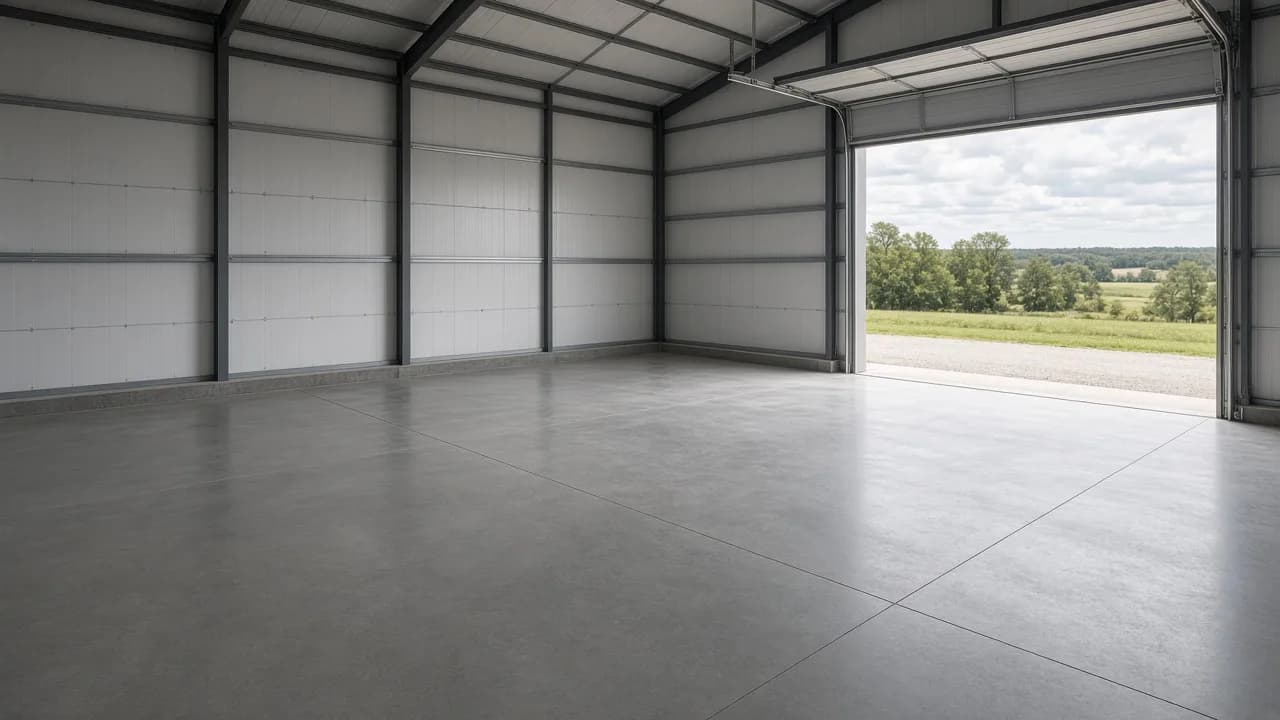
Barn floors, equipment pads, and ag driveways, bundle it with your build. Built for Noble County by proven Amish and local crews, get a straight quote with no obligation.
- Proven Amish & local crews
- Free, no-obligation quotes
- Northern Indiana & SW Michigan
- Honest ranges, no bait pricing
Free Ligonier quote
Tell us about your project and where it's going. A crew follows up fast.
Concrete Flatwork in Ligonier, Indiana
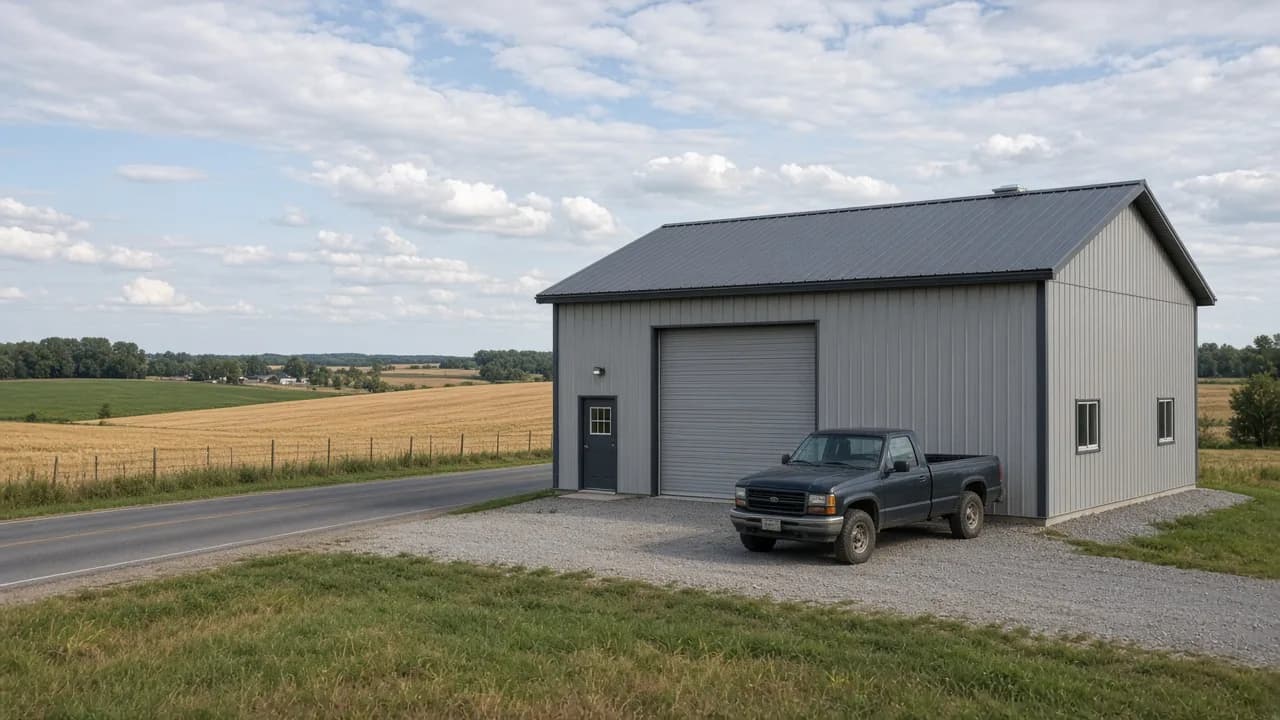
Ligonier and the Elkhart River farm country have long been underserved for good concrete. Amish and local crews come down from the Shipshewana area along US-33 and SR-5 to pour barn and shop floors, bin pads, and driveways, built on a graded base that holds up to Noble County freeze-thaw.
Serving Ligonier and Noble County
Ligonier sits in Noble County along the Elkhart River, a historic small town known today as the City of Murals, with a dense pre-war core, the Ligonier Historic District, that locals once nicknamed Little Chicago. Roughly 37 percent of the housing predates 1960 and 30 percent predates 1940, so the old, tight garages here drive real demand for a detached shop or storage building. This is a working-class manufacturing town wrapped in open farm country off US-33 and SR-5, and it is underserved: fewer builders work the area, which means fewer honest quotes for the farms and acreage owners around town. The demand is straightforward and affordable in character, equipment and grain storage, livestock and hay barns, shops, and all-purpose buildings on real farm parcels, plus workshops and hobby shops for factory households who want durable and value-priced.
Ligonier issues its own permits: the City of Ligonier Building and Zoning Department, 301 South Cavin Street, (260) 894-4113, handles work inside the city and runs its own Plan Commission. Unincorporated parcels route through the Noble County Building Department in Albion, (260) 636-2215, where a permit is required for any accessory building over 120 square feet, with only portable structures of 120 square feet or less exempt, so a real pole barn always needs one. The crew confirms the path and handles the filing. Soils are glacial farmland along the Elkhart River, with a higher water table on riverside parcels, and footings go below the local frost line for northern-Indiana snow load.
What's included
- Look at the site, grade, drainage, access for the truck
- Grade and compact a proper stone base
- Form and set the pour to the right height and slope
- Reinforce with wire or rebar as the load calls for
- Place, finish, and control-joint the concrete
- Options: thickened edges, apron, in-floor heat tubing rough-in
What it costs
Concrete flatwork is priced by the square foot and the thickness, so cost follows area and how heavy the loads will be. Most barn and farm pours in this area run $5,000 to $20,000. A standard barn or garage floor sits in the middle; a thicker pad rated for equipment or a large ag driveway runs higher. Site prep, grading, stone base, and drainage, is part of the number. Poured with your building or on its own, the quote follows a look at the site.
$5,000–$20,000
A firm number comes after a crew sees your site and spec, never before. No obligation.
The difference
Why proven Amish & local crews
Flatwork that lasts is mostly what happens before the pour, the base, the grade, the drainage. The crews we work with prep the ground properly and control-joint the slab so it cracks where it's supposed to and not across the middle, which is what separates a floor that lasts from one that fails in a few winters.
We connect you with established crews across the region, no subcontractor roulette, no national franchise markup. Straight positioning: the crews are real and the quotes are honest.
Concrete Flatwork: common questions
- How thick should a pole barn floor be?
- A typical barn or garage floor is four inches over a compacted stone base, which handles vehicles and general use. If you'll park heavy equipment, run a lift, or drive loaded trucks in, a thicker slab, five or six inches, sometimes with rebar, is worth it. The crew rates the slab to the heaviest thing that'll sit on it.
- Can you pour a floor in a barn that's already built?
- Yes, as long as the truck or pump can reach and there's room to grade and form inside the building. Many owners build the shell first and pour later once budget allows. The crew checks access and the interior grade and pours to the finished height you want.
- How do you keep the concrete from cracking?
- You can't stop concrete from moving, but you control where it cracks. That means a compacted base, proper thickness and reinforcement, and control joints cut at the right spacing so shrinkage cracks follow the joints instead of wandering across the floor. Good site prep and jointing are most of the battle in freeze-thaw country.
Ligonier questions
- Do builders actually come out to Ligonier and Noble County?
- Ours do. Noble County is more rural and underserved than the Elkhart corridor, which means owners here often struggle to get anyone to show up and quote. The proven crews we work with treat Ligonier as regular territory and will come walk your site, no runaround.
- Do I need a permit for a pole barn near Ligonier?
- Almost certainly yes. On unincorporated Noble County land, any accessory building over 120 square feet requires a permit through the Noble County Building Department in Albion, (260) 636-2215. Inside the city, the City of Ligonier Building and Zoning Department, (260) 894-4113, issues its own. A real pole barn is well over the exempt size, so the crew handles the permit either way.
Other projects in Ligonier
Get your free Ligonier quote
Call now or request a free quote, proven Amish and local crews across Michiana.