Farm Fencing in Middlebury, IN
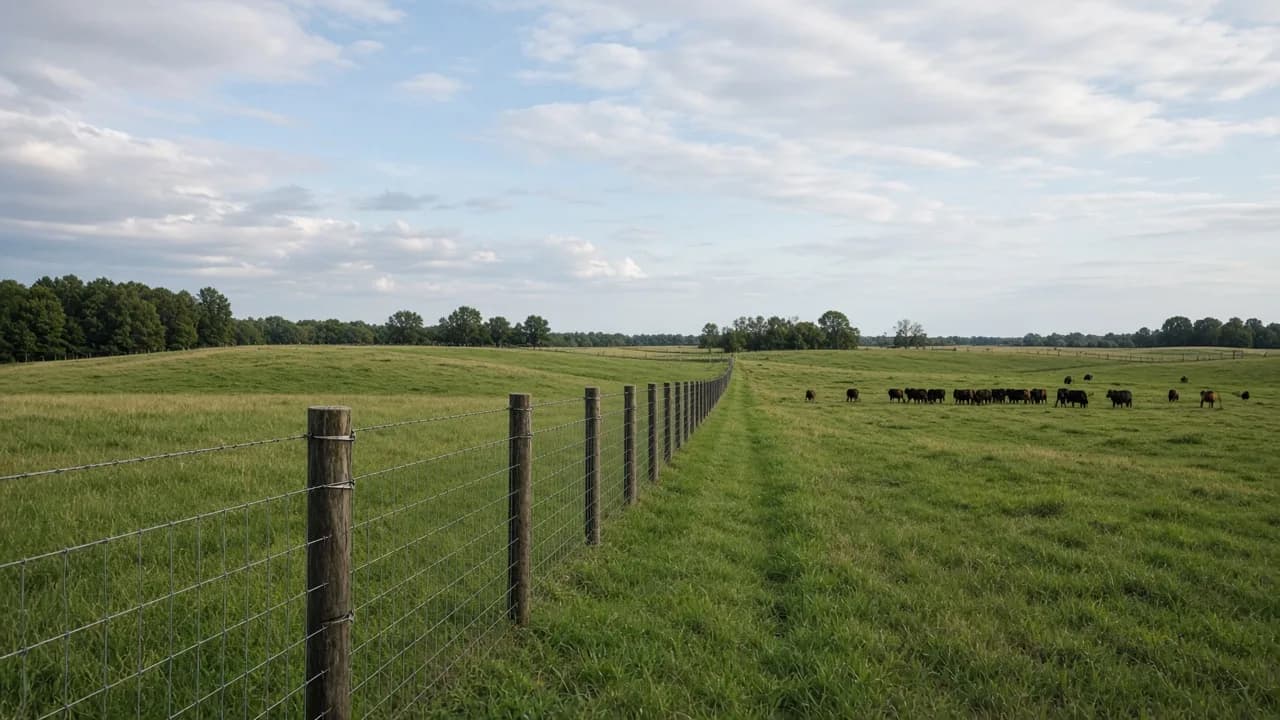
Livestock, horse, and high-tensile fence for pasture and property lines. Built for Elkhart County by proven Amish and local crews, get a straight quote with no obligation.
- Proven Amish & local crews
- Free, no-obligation quotes
- Northern Indiana & SW Michigan
- Honest ranges, no bait pricing
Free Middlebury quote
Tell us about your project and where it's going. A crew follows up fast.
Farm Fencing in Middlebury, Indiana
Middlebury sits in the heart of the LaGrange–Elkhart settlement, where dairy, hay, and livestock farms need fence that works every day. Just nine miles from our Shipshewana base, our Amish and local crews build woven-wire, high-tensile, and board fence on braced corners and posts set to hold.
Serving Middlebury and Elkhart County
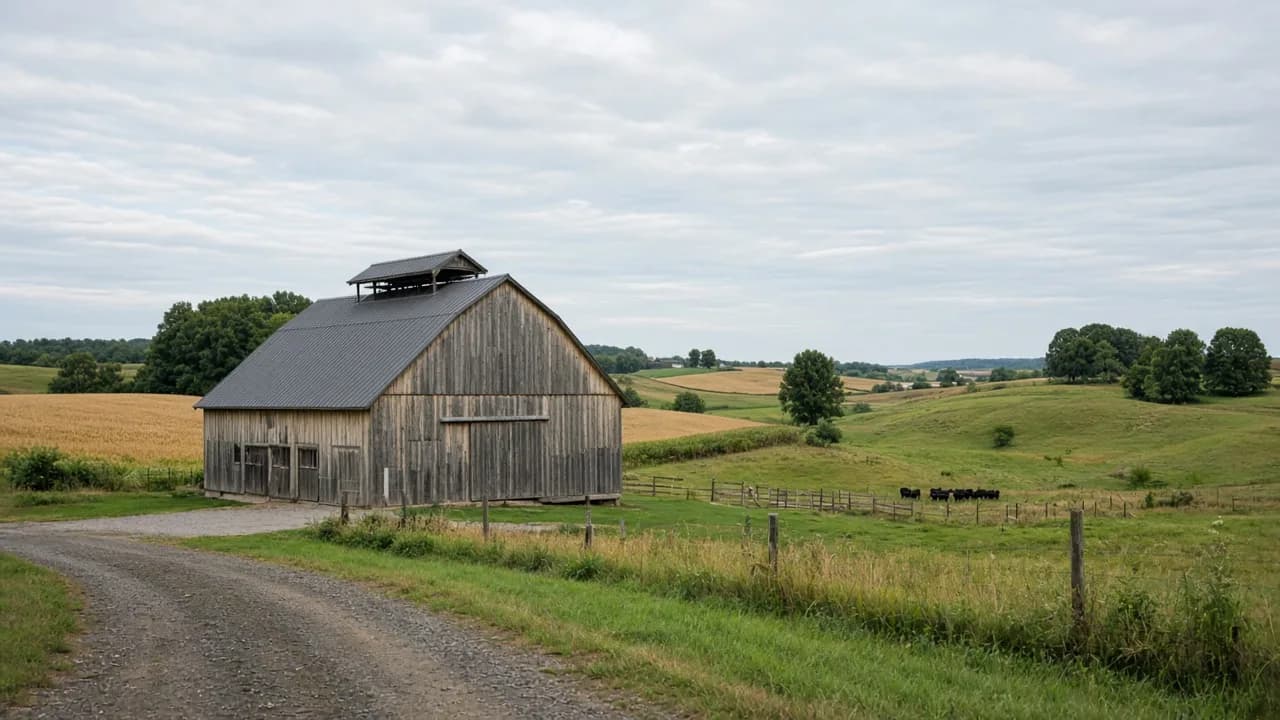
Middlebury sits right in the core of northern Indiana's Amish country, on US-20 between Elkhart and Shipshewana, with Das Dutchman Essenhaus at the edge of town and working farms in every direction. This is the heart of the Elkhart-LaGrange plain settlement, the third-largest Amish community in the United States, and here a post-frame barn is less a purchase decision than the default way you put up a building. The town also anchors an affluent RV corner, home to major motorhome manufacturers, and its housing skews newer, with about a fifth built before 1960 and well over half since 1980, which pulls in workshops and hobby shops on nicer rural properties alongside the farm work. Demand is farm-first, though: livestock and dairy barns, equipment and hay storage, and the shops a horse-and-buggy farm economy runs on, out along CR-16, the Middlebury-Shipshe Road, CR-22, and SR-13.
Middlebury runs a two-tier setup: the Town of Middlebury issues building permits through its Public Works Department, (574) 825-1499, but zoning and planning go through the Elkhart County Plan Commission even inside town limits. Rural parcels route entirely through Elkhart County Planning and Development, (574) 971-4678, where A-1 ag pole barns are routine. The crew confirms which path your address takes before sizing the building. This is rolling glacial farmland with fertile soils; low, wet spots near the Little Elkhart River carry a higher water table that the crew reads for post setting and drainage, and footings go below the local frost line for full northern-Indiana snow load.
What's included
- Walk the line, measure runs, mark corners and gates, flag obstacles
- Recommend a fence type for your animals, terrain, and budget
- Clear and prep the fence line as needed
- Set posts and build braced corner and end assemblies
- Hang wire, boards, or panels to the proper tension and spacing
- Install gates and hardware where you need access
What it costs
Farm fencing is priced by the foot and by the type, so total cost tracks with how much ground you're enclosing. Most projects in this area fall between $5,000 and $30,000. Woven wire and high-tensile runs are the most economical per foot; board fence and heavy-gauge horse fence cost more. Terrain, brush clearing, corner and gate hardware, and the number of gates all factor in. A walk of the line gives you a real per-foot number.
$5,000–$30,000
A firm number comes after a crew sees your site and spec, never before. No obligation.
The difference
Why proven Amish & local crews
A fence is only as good as its corners and its posts, the parts that don't show. The crews we work with brace corners properly and set posts to hold tension through frost heave and years of stock leaning on them, which is the difference between a fence you build once and one you keep fixing.
We connect you with established crews across the region, no subcontractor roulette, no national franchise markup. Straight positioning: the crews are real and the quotes are honest.
Farm Fencing: common questions
- What type of fence is best for my animals?
- It depends on what you're containing. High-tensile and woven wire suit cattle and general livestock economically; horses do better behind board, coated wire, or a fence with high visibility and no sharp edges; smaller stock needs tighter spacing. A good crew matches the fence to the animal and the terrain rather than selling one system for everything.
- Do you clear brush and fence lines before installing?
- Yes, line clearing is part of most jobs, you can't set a straight, tight fence through brush and saplings. The amount of clearing affects the quote, so it's assessed when the line is walked. Heavily overgrown or wooded lines take more prep than open pasture.
- How are corners and gates handled so the fence stays tight?
- Braced corner and end assemblies are what hold a wire fence's tension, without them a fence sags and fails. Crews build proper H-brace or diagonal-brace corners and set gate posts heavy so gates don't sag over time. It's the least glamorous part of the job and the most important.
Middlebury questions
- Do you build livestock and dairy barns around Middlebury?
- Yes, working livestock, dairy, and hay barns for the farms around Middlebury are exactly the kind of building the crews here raise. Layout for animals, ventilation, and hay storage are designed in from the start, not added later. Tell us how the barn will be used and the crew builds around it.
- Who do I get a permit from in Middlebury?
- It is split: the Town of Middlebury issues the building permit through Public Works, (574) 825-1499, while zoning and planning run through the Elkhart County Plan Commission even in town. Rural parcels go entirely through Elkhart County Planning and Development, (574) 971-4678. The crew sorts out which applies to your parcel and helps with the filing.
Other projects in Middlebury
Get your free Middlebury quote
Call now or request a free quote, proven Amish and local crews across Michiana.