Farm Fencing in Three Rivers, MI
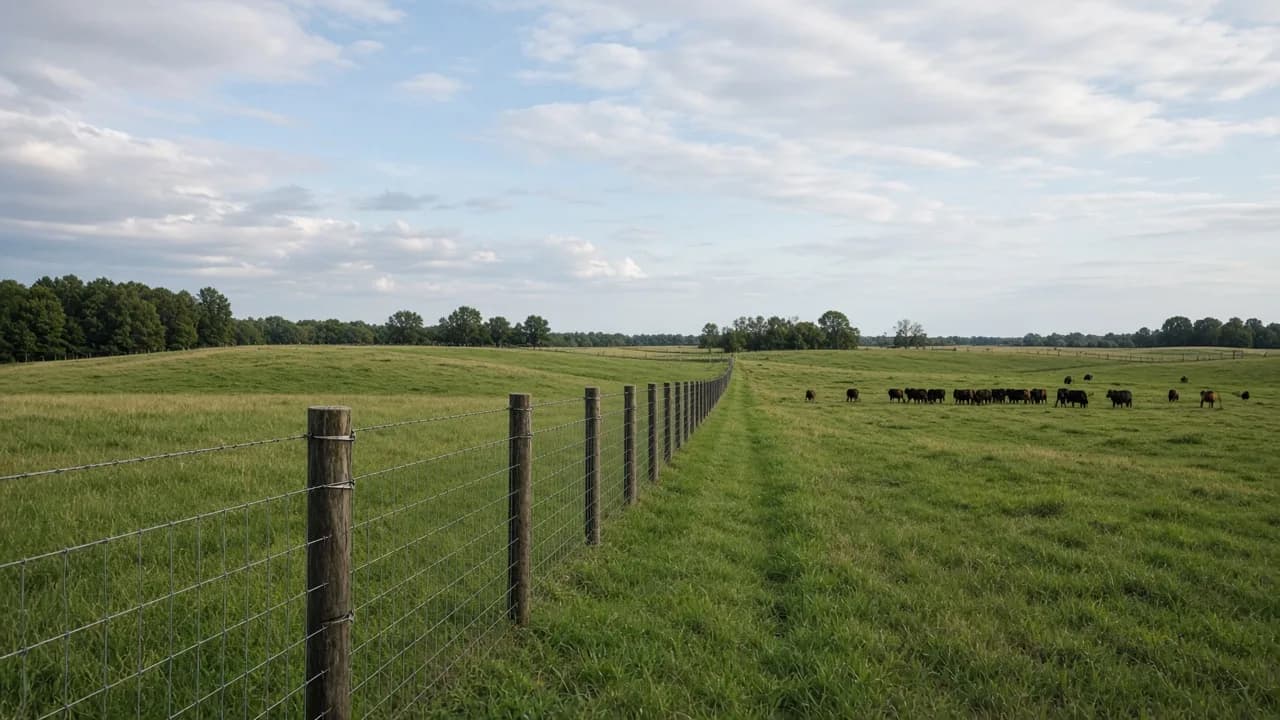
Livestock, horse, and high-tensile fence for pasture and property lines. Built for St. Joseph County by proven Amish and local crews, get a straight quote with no obligation.
- Proven Amish & local crews
- Free, no-obligation quotes
- Northern Indiana & SW Michigan
- Honest ranges, no bait pricing
Free Three Rivers quote
Tell us about your project and where it's going. A crew follows up fast.
Farm Fencing in Three Rivers, Michigan
Three Rivers sits where the St. Joseph, Rocky, and Portage rivers meet, in a farm and hobby-farm belt that keeps plenty of livestock and horses. Our crews cross the line from the Shipshewana area to build fence that holds them, with braced corners and posts set deep and straight.
Serving Three Rivers and St. Joseph County
Three Rivers takes its name from the meeting of the St. Joseph, Rocky, and Portage rivers, and it sits in a genuine farm and hobby-farm belt in northern St. Joseph County, Michigan, where US-131 and M-60 cross. The country around town runs to working farms, rural acreage, and the smaller lakes and rivers that pull in hobby-farm and recreation owners. The building demand splits between the two: equipment and livestock barns and shops for the working farms, and garages, workshops, and toy storage for the acreage and hobby-farm crowd.
Michigan uses a statewide construction code with a 42-inch footing frost depth, deeper than Indiana's, so footings go down further and that is engineered into every plan. St. Joseph County has no countywide building department, so permits run through the City of Three Rivers inside the city, or the township building official or the State of Michigan on rural land, which the crew confirms up front. River-adjacent and lake parcels near the St. Joseph, Rocky, or Portage rivers can carry floodplain and setback considerations worth confirming before siting a building.
What's included
- Walk the line, measure runs, mark corners and gates, flag obstacles
- Recommend a fence type for your animals, terrain, and budget
- Clear and prep the fence line as needed
- Set posts and build braced corner and end assemblies
- Hang wire, boards, or panels to the proper tension and spacing
- Install gates and hardware where you need access
What it costs
Farm fencing is priced by the foot and by the type, so total cost tracks with how much ground you're enclosing. Most projects in this area fall between $5,000 and $30,000. Woven wire and high-tensile runs are the most economical per foot; board fence and heavy-gauge horse fence cost more. Terrain, brush clearing, corner and gate hardware, and the number of gates all factor in. A walk of the line gives you a real per-foot number.
$5,000–$30,000
A firm number comes after a crew sees your site and spec, never before. No obligation.
The difference
Why proven Amish & local crews
A fence is only as good as its corners and its posts, the parts that don't show. The crews we work with brace corners properly and set posts to hold tension through frost heave and years of stock leaning on them, which is the difference between a fence you build once and one you keep fixing.
We connect you with established crews across the region, no subcontractor roulette, no national franchise markup. Straight positioning: the crews are real and the quotes are honest.
Farm Fencing: common questions
- What type of fence is best for my animals?
- It depends on what you're containing. High-tensile and woven wire suit cattle and general livestock economically; horses do better behind board, coated wire, or a fence with high visibility and no sharp edges; smaller stock needs tighter spacing. A good crew matches the fence to the animal and the terrain rather than selling one system for everything.
- Do you clear brush and fence lines before installing?
- Yes, line clearing is part of most jobs, you can't set a straight, tight fence through brush and saplings. The amount of clearing affects the quote, so it's assessed when the line is walked. Heavily overgrown or wooded lines take more prep than open pasture.
- How are corners and gates handled so the fence stays tight?
- Braced corner and end assemblies are what hold a wire fence's tension, without them a fence sags and fails. Crews build proper H-brace or diagonal-brace corners and set gate posts heavy so gates don't sag over time. It's the least glamorous part of the job and the most important.
Three Rivers questions
- Do you build on the hobby farms and acreage around Three Rivers?
- Yes, the hobby-farm and acreage belt around Three Rivers is core demand for garages, workshops, and storage barns, alongside working-farm buildings. Crews come to your parcel, walk it for grade and drainage, and build on-site to Michigan code, including the deeper 42-inch footing depth.
- My property is near one of the rivers, does that affect building?
- It can, parcels near the St. Joseph, Rocky, or Portage rivers may fall in a floodplain or carry extra setback rules, which affect where and how a building can sit. It's worth confirming with the local building official or township before siting, and the crew factors drainage and placement into the plan.
Other projects in Three Rivers
Get your free Three Rivers quote
Call now or request a free quote, proven Amish and local crews across Michiana.