Farm Fencing in Niles, MI
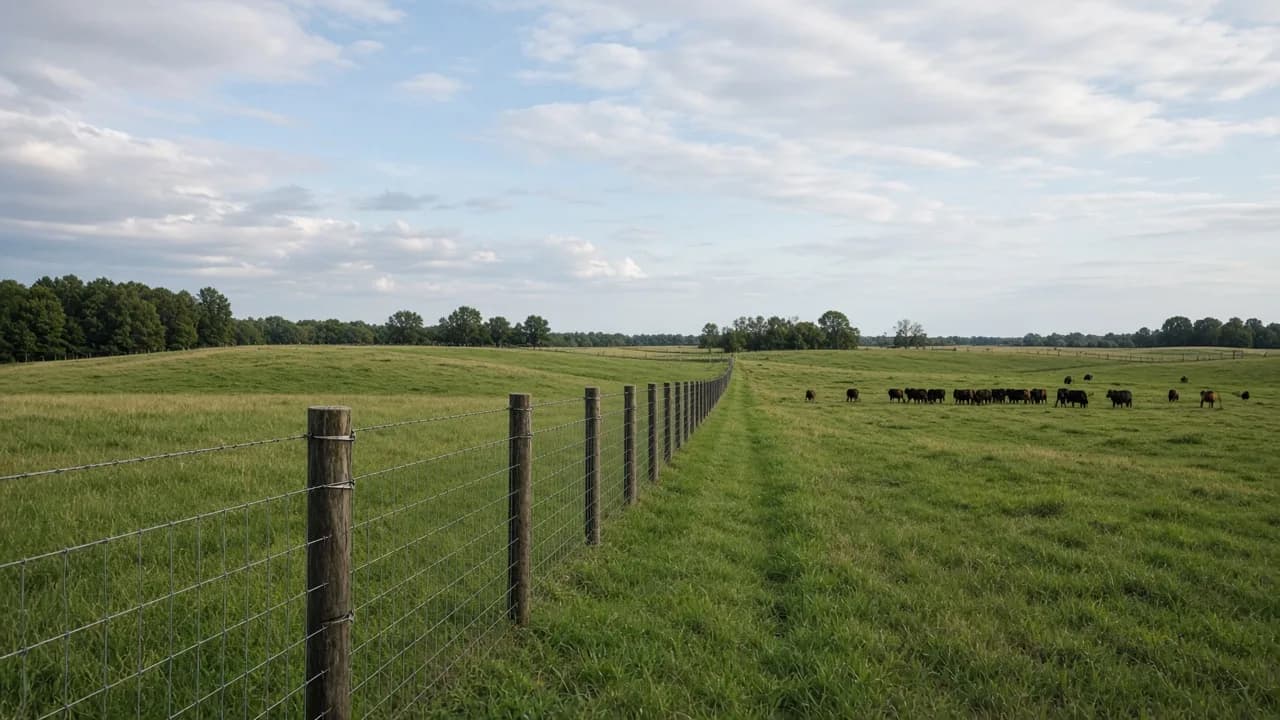
Livestock, horse, and high-tensile fence for pasture and property lines. Built for Berrien County by proven Amish and local crews, get a straight quote with no obligation.
- Proven Amish & local crews
- Free, no-obligation quotes
- Northern Indiana & SW Michigan
- Honest ranges, no bait pricing
Free Niles quote
Tell us about your project and where it's going. A crew follows up fast.
Farm Fencing in Niles, Michigan
Niles sits at the western edge of where we work, along the St. Joseph River near South Bend, but it's proven ground for our crews. On the farm and acreage north and west of town, our Amish and local crews build livestock and property-line fence on corners braced to last. Schedule ahead.
Serving Niles and Berrien County
Niles, the City of Four Flags, sits on the St. Joseph River in Berrien County, right up against the Indiana line with the South Bend metro just to the south, and it functions as a cross-border extension of that metro. It has some of the oldest, most affordable housing in our area, with about 58 percent built before 1960 and more than 80 percent before 1980, so the tight, dated garages here drive strong demand for a detached shop, garage, or storage barn at a sensible price. The land spreads north and west into Berrien County and the rural Niles Township country off US-12 and US-31, where working-farm equipment and livestock barns meet garages, workshops, and river-property storage for the acreage owners on the edges of town.
Niles builds to the Michigan statewide code, which sets a 42-inch footing frost depth, deeper than Indiana's, a genuine footing-and-cost difference for river-side and rural parcels. Inside the city, the City of Niles Building Safety Division, 1345 East Main Street, (269) 683-2374, issues permits as its own enforcing agency; Niles Charter Township and Niles Township issue their own for rural parcels, and septic runs through the Berrien County Health Department, (269) 927-5623. Soils are glacial along the river, with a higher water table on riverfront ground. The area sits in the Lake Michigan snowbelt, so heavier snow load is engineered into every plan.
What's included
- Walk the line, measure runs, mark corners and gates, flag obstacles
- Recommend a fence type for your animals, terrain, and budget
- Clear and prep the fence line as needed
- Set posts and build braced corner and end assemblies
- Hang wire, boards, or panels to the proper tension and spacing
- Install gates and hardware where you need access
What it costs
Farm fencing is priced by the foot and by the type, so total cost tracks with how much ground you're enclosing. Most projects in this area fall between $5,000 and $30,000. Woven wire and high-tensile runs are the most economical per foot; board fence and heavy-gauge horse fence cost more. Terrain, brush clearing, corner and gate hardware, and the number of gates all factor in. A walk of the line gives you a real per-foot number.
$5,000–$30,000
A firm number comes after a crew sees your site and spec, never before. No obligation.
The difference
Why proven Amish & local crews
A fence is only as good as its corners and its posts, the parts that don't show. The crews we work with brace corners properly and set posts to hold tension through frost heave and years of stock leaning on them, which is the difference between a fence you build once and one you keep fixing.
We connect you with established crews across the region, no subcontractor roulette, no national franchise markup. Straight positioning: the crews are real and the quotes are honest.
Farm Fencing: common questions
- What type of fence is best for my animals?
- It depends on what you're containing. High-tensile and woven wire suit cattle and general livestock economically; horses do better behind board, coated wire, or a fence with high visibility and no sharp edges; smaller stock needs tighter spacing. A good crew matches the fence to the animal and the terrain rather than selling one system for everything.
- Do you clear brush and fence lines before installing?
- Yes, line clearing is part of most jobs, you can't set a straight, tight fence through brush and saplings. The amount of clearing affects the quote, so it's assessed when the line is walked. Heavily overgrown or wooded lines take more prep than open pasture.
- How are corners and gates handled so the fence stays tight?
- Braced corner and end assemblies are what hold a wire fence's tension, without them a fence sags and fails. Crews build proper H-brace or diagonal-brace corners and set gate posts heavy so gates don't sag over time. It's the least glamorous part of the job and the most important.
Niles questions
- Is Niles within your build area?
- Yes, Niles is the western edge of our regular reach, about 55 miles from the crew base, and it's proven territory where crews already build. It's best handled with a scheduled site visit planned ahead rather than a same-day trip, and for a full build the distance doesn't materially affect things.
- How do Michigan rules change a build in Niles?
- The main differences are the code and the frost depth: Michigan's statewide code sets a 42-inch footing frost depth, deeper than Indiana's, so footings go down further. Inside the city, the City of Niles Building Safety Division, (269) 683-2374, issues the permit; rural parcels go through Niles Charter Township or Niles Township. The crew handles the Michigan path and engineers for the heavier snowbelt load.
More options
Get your free Niles quote
Call now or request a free quote, proven Amish and local crews across Michiana.