Farm Fencing in Sturgis, MI
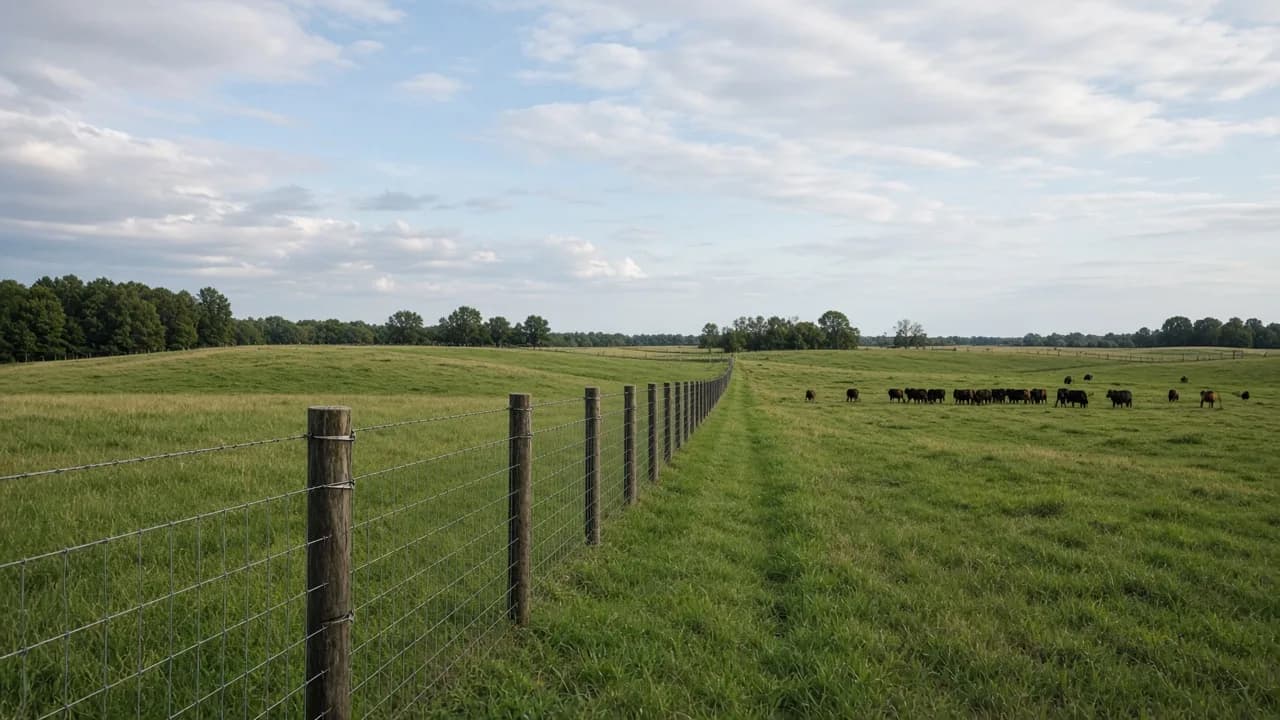
Livestock, horse, and high-tensile fence for pasture and property lines. Built for St. Joseph County by proven Amish and local crews, get a straight quote with no obligation.
- Proven Amish & local crews
- Free, no-obligation quotes
- Northern Indiana & SW Michigan
- Honest ranges, no bait pricing
Free Sturgis quote
Tell us about your project and where it's going. A crew follows up fast.
Farm Fencing in Sturgis, Michigan
Just over the state line on US-12, Sturgis anchors our Michigan work, from the farm and livestock acreage around town out toward Klinger Lake. Our Amish and local crews cross up from the Shipshewana area to build durable pasture and perimeter fence on corners that won't budge.
Serving Sturgis and St. Joseph County
Sturgis is our anchor market on the Michigan side, the Electric City, a working factory town that has run its own municipal electric utility since 1896, sitting on US-12 in southern St. Joseph County just a few miles north of the Indiana line. It is a manufacturing town at heart, so the strongest post-frame demand is working shops, hobby garages, and storage for production households, alongside real ag buildings on the surrounding rural townships. The housing is old and affordable, with over half built before 1960, which keeps the detached-shop demand steady, and the lake country south and west of town, Klinger Lake, Plumb Lake, and Prairie Lake, pulls in boat and equipment storage and lake-property outbuildings. Being right across the line from the Shipshewana settlement, Sturgis gets direct reach from the same plain-community crews.
Michigan uses a statewide construction code, and the footing frost depth is 42 inches, deeper than the Indiana standard, a real difference in footing depth and cost on the Michigan side. Inside the city, the City of Sturgis Community Development Department, 130 North Nottawa, (269) 651-2321, issues building permits, often same-day, while electrical, plumbing, and mechanical trade permits route to the State of Michigan. St. Joseph County has no countywide building department, so on rural or township land the township building official or the State handles it, which the crew confirms before starting. Soils vary with the glacial terrain, with higher water tables near the lakes and river.
What's included
- Walk the line, measure runs, mark corners and gates, flag obstacles
- Recommend a fence type for your animals, terrain, and budget
- Clear and prep the fence line as needed
- Set posts and build braced corner and end assemblies
- Hang wire, boards, or panels to the proper tension and spacing
- Install gates and hardware where you need access
What it costs
Farm fencing is priced by the foot and by the type, so total cost tracks with how much ground you're enclosing. Most projects in this area fall between $5,000 and $30,000. Woven wire and high-tensile runs are the most economical per foot; board fence and heavy-gauge horse fence cost more. Terrain, brush clearing, corner and gate hardware, and the number of gates all factor in. A walk of the line gives you a real per-foot number.
$5,000–$30,000
A firm number comes after a crew sees your site and spec, never before. No obligation.
The difference
Why proven Amish & local crews
A fence is only as good as its corners and its posts, the parts that don't show. The crews we work with brace corners properly and set posts to hold tension through frost heave and years of stock leaning on them, which is the difference between a fence you build once and one you keep fixing.
We connect you with established crews across the region, no subcontractor roulette, no national franchise markup. Straight positioning: the crews are real and the quotes are honest.
Farm Fencing: common questions
- What type of fence is best for my animals?
- It depends on what you're containing. High-tensile and woven wire suit cattle and general livestock economically; horses do better behind board, coated wire, or a fence with high visibility and no sharp edges; smaller stock needs tighter spacing. A good crew matches the fence to the animal and the terrain rather than selling one system for everything.
- Do you clear brush and fence lines before installing?
- Yes, line clearing is part of most jobs, you can't set a straight, tight fence through brush and saplings. The amount of clearing affects the quote, so it's assessed when the line is walked. Heavily overgrown or wooded lines take more prep than open pasture.
- How are corners and gates handled so the fence stays tight?
- Braced corner and end assemblies are what hold a wire fence's tension, without them a fence sags and fails. Crews build proper H-brace or diagonal-brace corners and set gate posts heavy so gates don't sag over time. It's the least glamorous part of the job and the most important.
Sturgis questions
- You're based in Indiana, do you really build in Sturgis, Michigan?
- Yes, Sturgis is our anchor Michigan market, only about 20 miles from the Shipshewana crew base, just across the state line. The same proven crews build here regularly. The main difference is that plans and permits follow Michigan requirements, including a deeper 42-inch footing frost depth, which the crew handles.
- Are Michigan permit and frost rules different from Indiana's?
- They are. Michigan uses a statewide code with a 42-inch footing frost depth, deeper than Indiana's, so footings go down further. In the city, the City of Sturgis Community Development Department, (269) 651-2321, issues the permit; St. Joseph County has no countywide building office, so rural parcels go through the township or the State. Every building here is engineered for Michigan snow load and code.
More options
Get your free Sturgis quote
Call now or request a free quote, proven Amish and local crews across Michiana.